
Prague Castle Changing of the Guard — Times, Tips & What to Expect
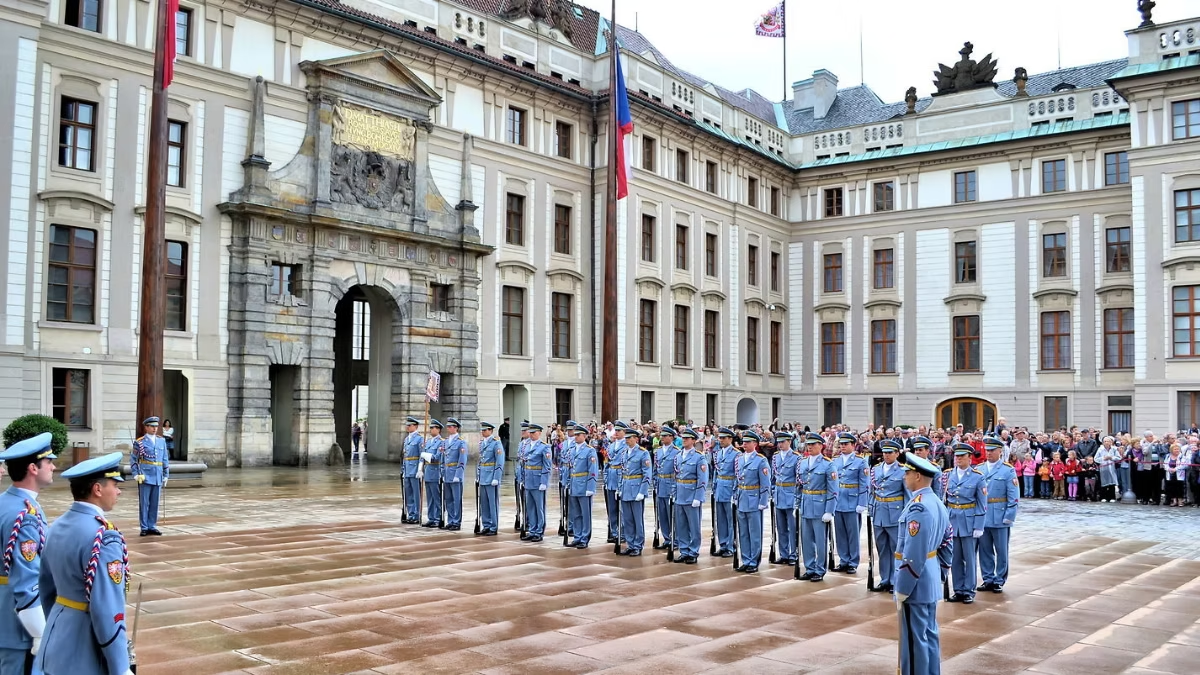
The Prague Castle Changing of the Guard is one of the most visible free spectacles in Central Europe — a precision military ceremony that has marked the hours at the castle gates since the founding of the Czechoslovak Republic in 1918. The full noon ceremony, with brass fanfare, flag exchange, and an immaculately drilled guard contingent in their distinctive grey uniforms, draws hundreds of visitors every day to the First Courtyard. The hourly changes at the castle gates are quieter but equally precise.
Understanding when to arrive, where to stand, and what to look for makes the difference between catching a clear view and arriving to a wall of backs.
When Does the Changing of the Guard Happen?
The ceremonial Changing of the Guard — the full ceremony with music, fanfare, and flag exchange — takes place every day at noon (12:00pm) in the First Courtyard. Hourly guard changes happen at the Titans Gate (Hradčanské Square) and the Powder Bridge Gate every hour from 7am to 8pm (summer) / 7am to 6pm (winter). All ceremonies are free to watch.
Noon Ceremony (Daily, 12:00pm)
The main event. Every day at precisely noon, a marching contingent of the Castle Guard moves from the barracks to the First Courtyard, accompanied by a brass fanfare from the Castle Guard Band (musicians positioned in the windows above the courtyard). The ceremony includes: – A full military march into formation – Brass fanfare – Formal exchange of the presidential standard (flag) – Synchronized rifle drills and a precision formation change – Duration: approximately 15 minutes
This is the Changing of the Guard worth planning your morning around. It is significantly more theatrical than the hourly changes and is the version that features in all the photographs.
Hourly Guard Changes (Every Hour)
Throughout the day, smaller guard changes take place at the main castle gates — the Titans Gate on Hradčanské Square and the Powder Bridge Gate on the northern side: – Summer (April–October): 7:00am to 8:00pm – Winter (November–March): 7:00am to 6:00pm
These hourly changes are quiet, precise exchanges — rifle passes, salutes, and a disciplined rotation. No music, no fanfare. Worth watching if you happen to be passing at the right moment, but not worth specifically timing your visit around.
Where to Watch
For the noon ceremony: the First Courtyard (inside the Matthias Gate). Arrive at least 10–15 minutes before noon to position yourself by the railings at the front. The best viewing positions are along the northern and southern sides of the courtyard — not directly behind the gate arch (which gives only a partial view). For the hourly changes: the Titans Gate on Hradčanské Square, viewable from the square itself, is the most dramatic backdrop.
Best Viewing Spots for the Noon Ceremony
First Courtyard railings — the wrought iron railings along the sides of the courtyard give clear sight lines to the formation changes and the flag ceremony. Arrive 10–15 minutes before noon to secure a position against the railings.
In front of the Matthias Gate — standing in the open area directly in front of the gate (but inside the courtyard) gives you a full view of the ceremony space. Arrive earlier (20 minutes) for this position as it fills quickly.
North and south sides of the courtyard — elevated positions along the sides of the courtyard give slightly elevated views over the crowd. The ceremony is broad enough that there is no single “best” position — it is a 360-degree formation, not a procession past a fixed point.
What NOT to do: Do not watch from the Second Courtyard side — the archway between the First and Second Courtyards gives only a narrow partial view. Do not arrive at 12:05pm expecting to find a position — the front rows are taken 15 minutes before the ceremony.
Best Viewing for Hourly Changes
The guards at the Titans Gate on Hradčanské Square are viewed from the square itself (outside the castle entrance). The backdrop — the Giants Gate statuary, the castle facade, the Archbishop’s Palace — is visually dramatic. The east gate (near the Old Castle Stairs) is quieter and a good place to see the guards in a smaller, more intimate setting.
What Are the Castle Guard Uniforms?
The Prague Castle Guards’ distinctive uniforms — grey coats, white shirts, black caps — were designed after 1989 by Theodor Pištěk, an Oscar-winning Czech costume designer known for his work on the 1984 film Amadeus. Before 1989, the communist-era guards wore Soviet-influenced uniforms; the current design was commissioned by President Václav Havel to reflect Czech national identity.
Pištěk’s uniforms draw on historical Czech military dress while creating something visually distinctive. The grey colour, the formal cut, and the ceremonial swords and rifles create an aesthetic that is recognisably Central European without mimicking any specific historical period.
The Castle Guard is an elite unit of the Armed Forces of the Czech Republic — not a purely ceremonial force. Guards are responsible for the physical security of the Czech President and the castle complex, and they undergo full military training alongside ceremonial duties.
Practical Tips
Arrive early. For the noon ceremony, 10–15 minutes is the minimum. For a front row position, 20–25 minutes is safer. The courtyard fills quickly on summer weekdays and is particularly crowded on summer weekends.
The ceremony happens in all weather. Rain, cold, heat — the Changing of the Guard takes place regardless. In very extreme weather conditions the format may be modified, but cancellations are rare.
Respect the 0.5 metre rule. Prague Castle regulations require visitors to stay at least 0.5 metres from any guard. Do not attempt to touch a guard or their equipment, stand directly in front of them for selfies, or in any way obstruct their duties. Guards will not react, but security staff will intervene.
Photography is permitted. You can photograph and video the ceremony freely from the courtyard. Flash photography is acceptable in the outdoor setting.
The noon ceremony and the itinerary. If you are following the Prague Castle half-day itinerary, the noon ceremony fits naturally between a morning in the cathedral and the Old Royal Palace and a post-noon visit to St. George’s Basilica and Golden Lane.
The tour itinerary. The small-group guided tour often times itself to catch the noon ceremony as part of the 2.5-hour itinerary — the guide explains the uniforms, the history of the Guard, and the ceremony’s significance while you watch.
Who Are the Prague Castle Guards?
The Prague Castle Guard (Hradní stráž) is a specialist military unit of the Czech Armed Forces responsible for guarding the President and the castle complex. Founded in 1918 with the establishment of the Czechoslovak Republic, the Guard has been attached to the presidential residence ever since.
Recruits must be Czech citizens, aged 18+, with a height of 175–195 cm, a clean criminal record, and good physical fitness. The guards are on active military duty — not merely ceremonial performers — and are trained accordingly.
Frequently Asked Questions
What time is the Changing of the Guard at Prague Castle?
The main ceremony with music is daily at noon (12:00pm) in the First Courtyard. Hourly guard changes happen at the main gates from 7am to 8pm (summer) / 7am to 6pm (winter).
Is the Prague Castle Changing of the Guard free?
Yes. All Changing of the Guard ceremonies are free to watch. No ticket is required.
How long does the noon ceremony last?
Approximately 15 minutes.
What is the best spot to watch the Changing of the Guard?
The First Courtyard railings, arriving 10–15 minutes before noon. Avoid the archway between the First and Second Courtyards — this gives only a partial view.
Does the Changing of the Guard happen every day?
Yes, including weekends and Czech public holidays. Rare cancellations occur for state ceremonial reasons — check hrad.cz before your visit on national holidays.
Can I touch the guards?
No. Regulations require staying at least 0.5 metres from any guard. Security staff will intervene if visitors breach this distance.
Who designed the Prague Castle Guard uniforms?
Theodor Pištěk, Czech Oscar-winning costume designer, after 1989 on commission from President Václav Havel.
Insider Tip
Arrive early. For the noon ceremony, 10–15 minutes is the minimum. For a front row position, 20–25 minutes is safer. The courtyard fills quickly on summer weekdays and is particularly crowded on summer weekends.
