
Prague Castle Courtyards — First, Second, Third & Fourth
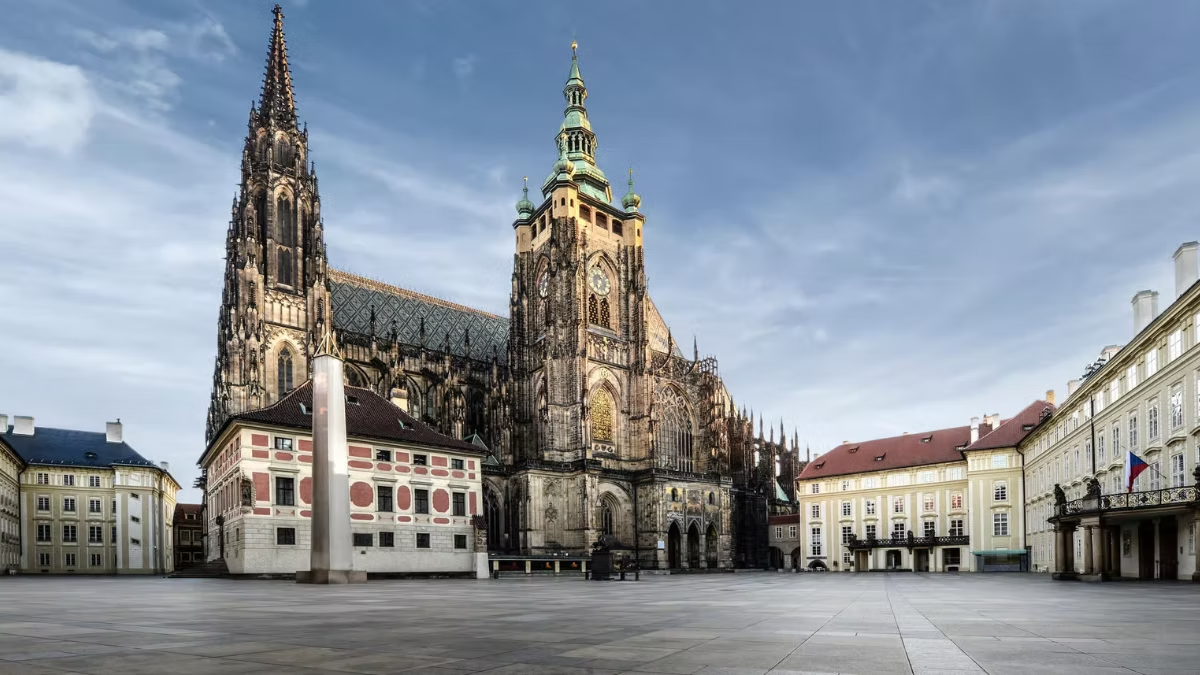
Prague Castle’s four courtyards are the connective tissue of the complex — the outdoor spaces that link the buildings, frame the views, and define the rhythm of a visit. All four are free to enter. But they are not all the same: the First Courtyard is a ceremonial staging ground, the Second is the practical hub, the Third is the architectural heart, and the Fourth is a quiet transition space that most visitors pass through without stopping. Understanding the differences helps you navigate the castle more purposefully.
Overview: The Four Courtyards
Prague Castle has four main courtyards, all free to enter. The First Courtyard (western entrance from Hradčanské Square) is the ceremonial space — home to the Changing of the Guard. The Second Courtyard is the practical hub with ticket offices and the Picture Gallery. The Third Courtyard is the architectural centrepiece — St. Vitus Cathedral dominates its north face. The Fourth Courtyard is the smallest and connects the others to the Royal Garden.
| Courtyard | Location | Key Features | Entry Requirement |
|---|---|---|---|
| First | West end | Matthias Gate, Giants Gate, Changing of the Guard | Free |
| Second | Central-west | Ticket office, Baroque fountain, Chapel of the Holy Cross, Picture Gallery | Free |
| Third | Central | St. Vitus Cathedral south facade, Old Royal Palace entrance, obelisk | Free |
| Fourth | North-west | Connection to Royal Garden, Garden on the Bastion | Free |
First Courtyard
The First Courtyard is the castle’s ceremonial space, entered through the Matthias Gate from Hradčanské Square. It is where the noon Changing of the Guard takes place daily. The main features are the statues of Battling Giants above the entrance pillars and the Matthias Gate itself.
The First Courtyard is the most austere of the four — a large rectangular cobblestone space with relatively plain facades on either side. Its primary function is ceremonial: presidential arrivals and departures, state visits, and the daily Changing of the Guard.
Key features:
Matthias Gate (Matyášova brána) — the Baroque gate separating Hradčanské Square from the First Courtyard, built in 1614. It is the oldest Baroque building at Prague Castle. The gate bears a Latin inscription dating from the Habsburg Emperor Matthias’s reign.
Battling Giants (Fighting Titans) — the two dramatic sculptural groups above the outer entrance pillars on Hradčanské Square, showing wrestlers in battle. The current statues are 1912 copies of the 18th-century originals by Ignaz Platzer. They are one of the defining images of the castle’s exterior.
Flagpoles — the tall flagpoles in the courtyard carry the Czech flag (when the President is not in residence) or the presidential standard (when the President is present). The flag type indicates whether the head of state is at the castle.
Changing of the Guard — occurs daily at noon in this courtyard with full ceremony: military march, brass fanfare, flag exchange, and formation drill. The hourly guard changes also happen here throughout the day, though without the music. Arrive 10–15 minutes early for the noon ceremony to secure a position by the railings.
Second Courtyard
The Second Courtyard is the practical hub of Prague Castle — it contains the main ticket office (information centre), the Prague Castle Picture Gallery, the Chapel of the Holy Cross, the Baroque Kohl Fountain, and is the quieter of the two ticket purchasing locations.
Key features:
Kohl Fountain — the Baroque fountain at the centre of the courtyard, fed by a water conduit from the Brusnice stream. Cast in the mid-17th century by Francesco Torre. Most visitors photograph it without knowing its name or age — it is one of the oldest working water features in the complex.
Information Centre (ticket office) — on the north side of the courtyard. This office is notably less busy than the Third Courtyard ticket office, making it the preferred purchase point for visitors arriving from the Pražský hrad tram stop. Sells all circuit tickets and audio guides.
Prague Castle Picture Gallery — in the north wing of the Second Courtyard. Houses a selection of Baroque and Mannerist paintings from Emperor Rudolf II’s collection, including works by Titian, Veronese, Tintoretto, and Rubens. Separate Permanent Exhibitions ticket.
Chapel of the Holy Cross (Kaple sv. Kříže) — the late-Baroque chapel on the south side of the Second Courtyard is usually closed to the public, but opens during the Christmas period (December–January) for a free nativity exhibition. Worth looking out for if visiting in winter.
Spanish Hall entrance — the Spanish Hall (Španělský sál), Rudolf II’s great ceremonial hall in the northern wing, is not normally open to the public but is visible from the information board near the entrance. It is used by the Czech President for state ceremonies.
Third Courtyard
The Third Courtyard is the heart of Prague Castle. St. Vitus Cathedral’s south facade dominates its northern face. The Old Royal Palace entrance is on the south. The obelisk at the centre commemorates Czech soldiers from World War I. The main circuit ticket office is here, directly in front of the cathedral.
The Third Courtyard is where the castle’s architectural drama is concentrated. Standing in the middle and looking north, you see the full south facade of the cathedral: the Golden Gate (with its 14th-century Last Judgement mosaic), the flying buttresses, and the towers rising above. This is the best position from which to photograph the cathedral and the key photo stop for virtually every visitor.
Key features:
St. Vitus Cathedral south facade — the most photographed view in the entire castle complex. The Gothic south portal, the Golden Gate mosaic, and the Great South Tower are all visible from the Third Courtyard.
Golden Gate mosaic — the 14th-century Venetian-style mosaic of the Last Judgement above the south portal of the cathedral is one of the most remarkable medieval mosaics north of the Alps, restored in the late 20th century.
Obelisk — the tall granite obelisk at the centre of the courtyard was designed by Josip Plečnik in 1928 as a memorial to the Czechoslovak soldiers who died in World War I. At nearly 17 metres, it is the tallest granite monolith in Central Europe.
Equestrian statue of St. George — in the courtyard, a 14th-century bronze statue of St. George slaying the dragon. The original is displayed in the Story of Prague Castle exhibition; the current one is a replica.
Ticket office (Information Centre) — directly opposite the south cathedral entrance. The busiest ticket office in the complex; the Second Courtyard office is the less crowded alternative.
Bull Staircase entrance — the access point for the South Gardens is via the Bull Staircase in the south-west corner of the Third Courtyard, next to the Old Royal Palace entrance. Seasonal (April–October).
Everything visible from the Third Courtyard — the cathedral interior, the Old Royal Palace, Golden Lane — is covered by the Main Circuit ticket. Buy in advance to skip the Third Courtyard ticket queue.
Fourth Courtyard
The Fourth Courtyard is the smallest and quietest of the four. It connects the castle’s main area to the Royal Garden to the north and the Garden on the Bastion to the south. Most visitors pass through without stopping. It also gives access to the riding school and some of the exhibition halls.
The Fourth Courtyard is primarily a transition space — a passage rather than a destination. It is architecturally plain and has fewer focal points than the other three, but it serves as the main connection to the Royal Garden in the summer, and the Garden on the Bastion is accessible from here year-round.
Practical Information
All four courtyards are free to enter from 6am to 10pm daily. Security checks apply at the castle entrances — bags are subject to inspection. No tickets are required to access any courtyard.
The main entrances from which visitors approach each courtyard: – First Courtyard — from Hradčanské Square via the Matthias Gate (the main ceremonial entrance) – Second Courtyard — from the Pražský hrad tram stop via the Powder Bridge (most practical for tram arrivals) – Third Courtyard — from the Second Courtyard (walking east through the connecting archway) – Fourth Courtyard — from the First Courtyard via the Garden on the Bastion, or from the Second Courtyard
Frequently Asked Questions
Are the Prague Castle courtyards free?
Yes. All four courtyards are free to enter from 6am to 10pm daily. No ticket is required for the outdoor spaces.
Which courtyard is best for the Changing of the Guard?
The First Courtyard. The noon ceremony with music and flag exchange takes place here daily at 12pm. The hourly guard changes at the Matthias Gate (between First and Second Courtyards) are visible from both.
Which courtyard has the ticket office?
Both the Second Courtyard and Third Courtyard have ticket offices. The Second Courtyard office is less busy. Both sell the same tickets at the same price.
Which courtyard has the best view of St. Vitus Cathedral?
The Third Courtyard, directly in front of the south facade. The view from outside the entrance on Hradčanské Square and from the South Gardens also offer excellent perspectives.
